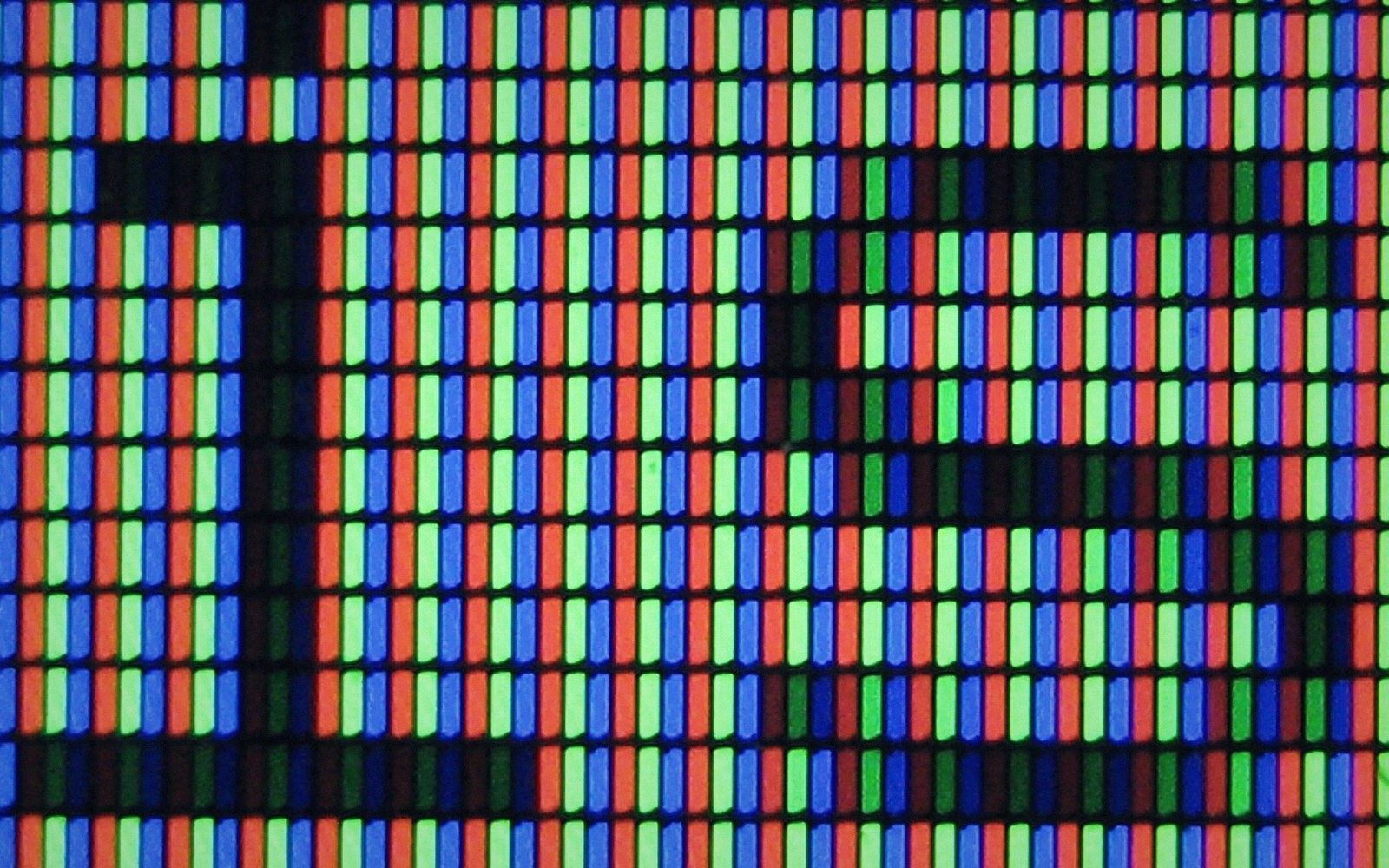
What Lives Between the Glass
Fourteen distinct layers stand between the LED and your eye. Knowing which one fails, and why, turns a troubleshooting guess into a diagnosis.
Read the flagship explainer →Six channels, one registration
Colour is the index, not the decorationPanel Architecture
How the physical stack of a display panel is built — from TFT backplane to cover glass.
Latest on this channelThe Organic Stack That Actually Emits
Light & Colour
How panels produce, filter and transform light into the colours that reach your eye.
Latest on this channelThe Triangle Is Not the Colour
Motion
Refresh, persistence, sample-and-hold, and why fast panels can still look wrong.
Latest on this channelThe Frame Held Too Long
Manufacturing
How panels are made at scale — fabs, yield, glass generations, and why defects happen.
Latest on this channelThe Sheet of Glass That Determines the Price
Reading the Spec
What spec-sheet numbers actually mean — and the conditions under which they were measured.
Latest on this channelThe Contrast Number and the Room It Requires
Measurement & Tools
The instruments and methods used to measure what a panel actually does.
Latest on this channelFilter Wheel Against Full Spectrum
“Fourteen layers. One image. Any one of them can be the culprit.”What Lives Between the Glass · read it →
Half the backlight is gone before the picture starts
A linear polariser transmits at best roughly half of unpolarised incident light and absorbs the rest as heat. That is not a manufacturing failure — it is a consequence of the photoselective absorption that produces linear polarisation in the first place, and an LCD needs two of them.
Condition: unpolarised incident light, iodine-doped PVA polariser. Source: What Lives Between the Glass.